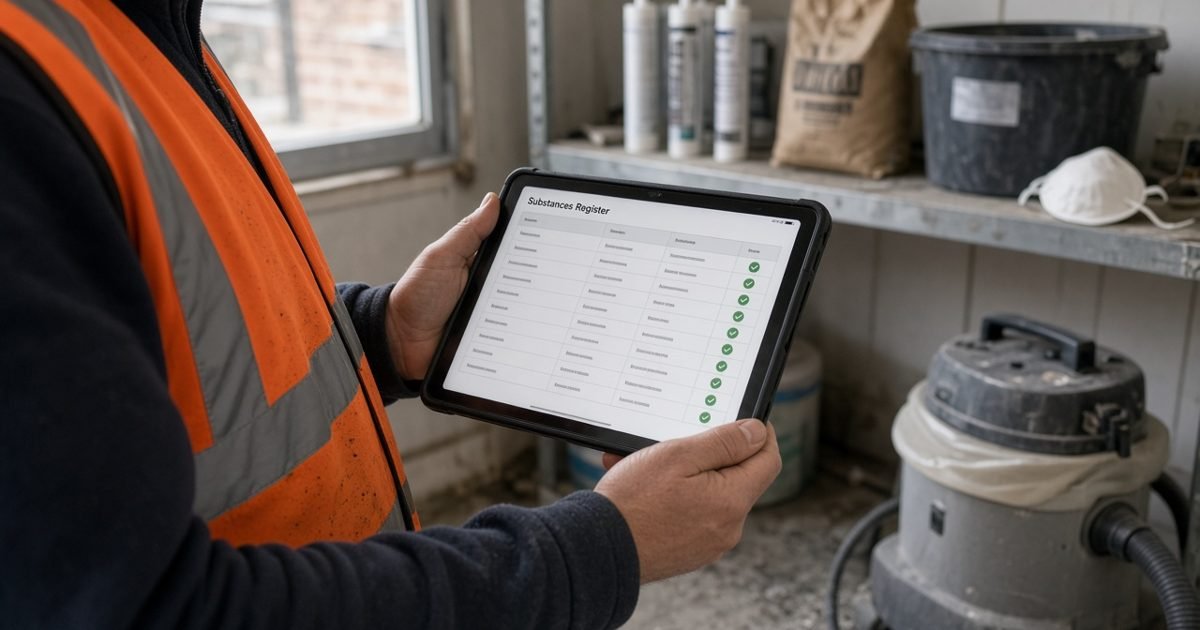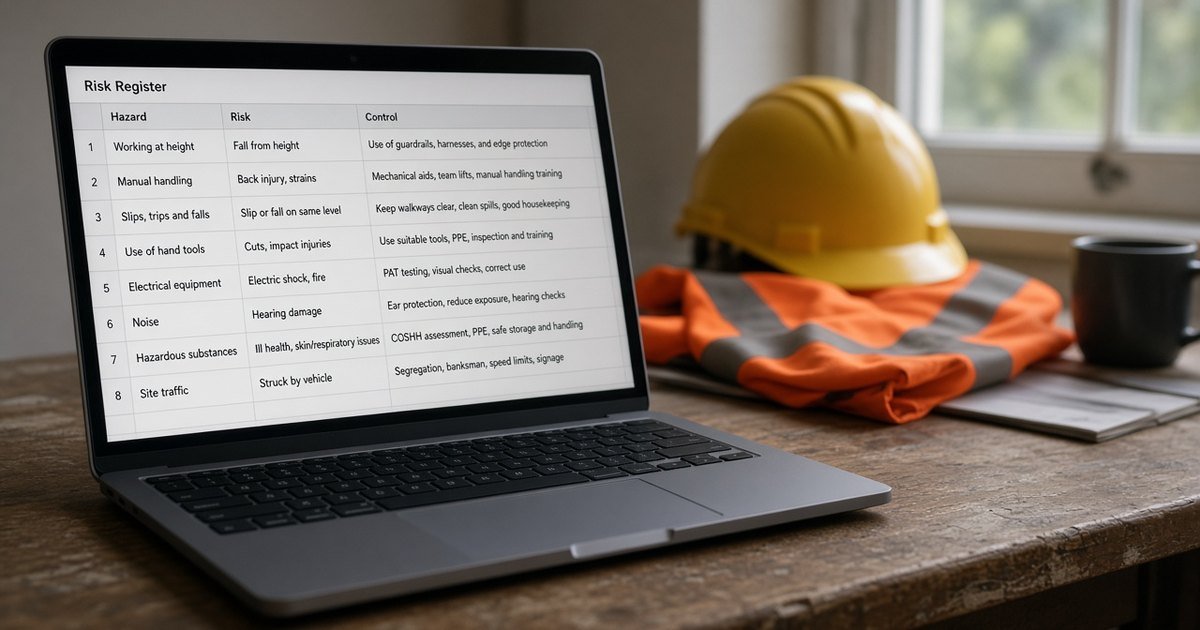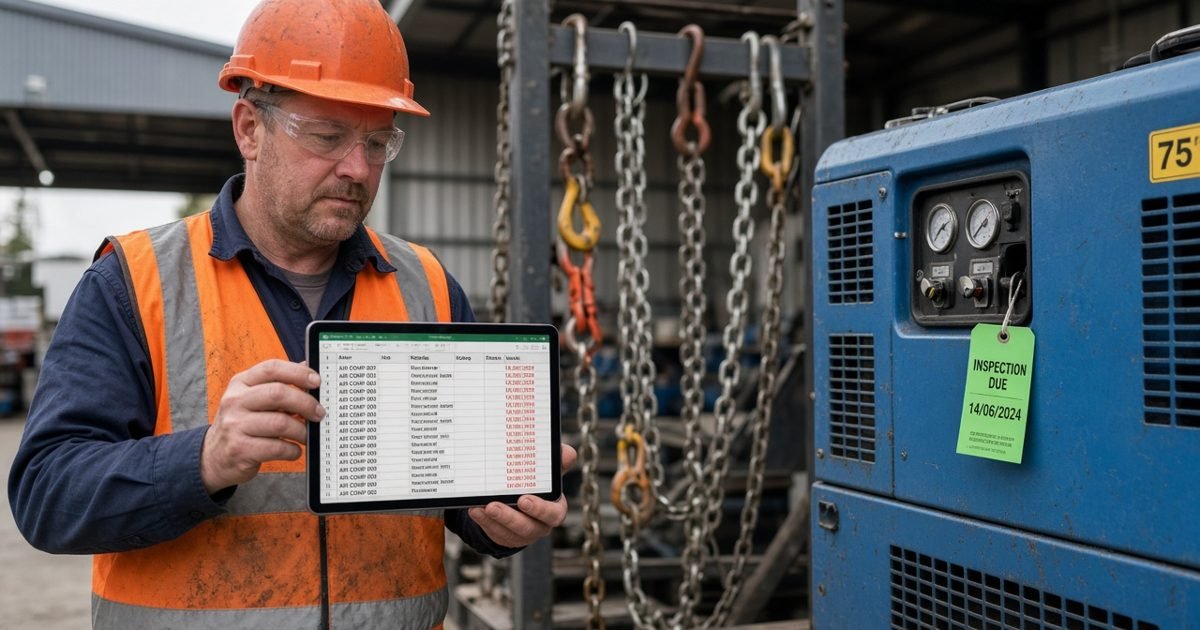
A statutory inspections register is one of the quickest wins for an ISO 45001 contractor. It is a single list of the equipment and installations the law says must be inspected or examined, who does it, when it was last done and when it is next due. For construction SMEs, it is also one of the first places a UKAS assessor looks when they want to know whether your health and safety system actually works.
This guide is for UK contractors and owner-led firms, including those working towards ISO 45001 in Scotland, who want inspection dates under control without building another spreadsheet nobody opens.
What does ISO 45001 expect for inspections?
ISO 45001 does not list inspections by name. It asks you to know your legal requirements, control your risks, and monitor and measure whether those controls are working. Statutory inspections sit right across all three. If a regulation says a piece of equipment must be examined by a competent person, ISO 45001 expects you to know that, plan it and keep the evidence.
So the assessor’s question is simple: can you show that everything which needs a legal inspection has one, and that nothing has quietly gone overdue?
Which inspections usually belong on the register?
Every business is different, so build your list from the equipment you actually own, hire and use. For many construction and engineering SMEs it will include some of these:
- Lifting equipment and accessories under LOLER 1998, such as hoists, slings, chains, shackles and mobile elevating work platforms. Thorough examination intervals are set by the regulations or by a written scheme.
- Pressure systems under the Pressure Systems Safety Regulations 2000, such as air compressors and receivers. These need a written scheme of examination and examinations by a competent person at the intervals it sets.
- Local exhaust ventilation under COSHH, such as on-tool extraction and dust units, which needs a thorough examination and test.
- Electrical installations and portable equipment under the Electricity at Work Regulations 1989, such as the fixed installation at your yard or office and the tools that go to site.
- Work equipment under PUWER 1998, where conditions on site can cause deterioration and lead to danger.
- Scaffolds and excavations, where the Work at Height Regulations 2005 and CDM 2015 require inspections by a competent person before use and at set points.
- Fire safety equipment at your premises, such as extinguishers, alarms and emergency lighting.
Hired equipment counts too. The hire company usually holds the examination certificate, but you should still be able to show you checked it was in date before the kit was used.
What should each line on the register show?
Keep it short. Each line needs:
- The item, with an asset number or serial number so it can be traced.
- The legal requirement or reason it is on the list.
- Who carries out the inspection or examination (in-house competent person, insurer’s engineer or specialist contractor).
- The date last done and the date next due.
- Where the certificate or report is kept.
- Any defects found and how they were closed.
A shared spreadsheet, a Microsoft List or the asset module in your existing software is fine. What matters is that one person owns it and that due dates are visible before they arrive, not after.
What does a UKAS assessor actually sample?
Assessors rarely read the whole register. They pick a few items and follow the trail. Typically they will:
- Choose an item they saw on site or in the yard and ask to see its latest examination report.
- Check the report is in date and that any defects flagged have been dealt with.
- Ask how you know when the next one is due, and who is responsible.
- Look for equipment in use that is not on the register at all.
That last point is the one that catches people out. A compressor bought last spring, or a new set of lifting accessories, that never made it onto the list is a gap in your planning, not just your paperwork.
How do you keep it lean?
The register does not need to be a project. A few habits keep it under control:
- Add items when you buy or hire them. Make “add to inspection register” part of your purchasing step, not something you remember at audit time.
- Use reminders, not memory. Put the next due dates into a shared calendar or set alerts a month ahead so there is time to book the engineer.
- Link to the reports. Store certificates in one folder and link to them from the register, rather than printing copies.
- Review it at management review. One line in your management review on overdue or upcoming inspections is enough to show top management oversight.
- Remove what you no longer have. Disposed or returned equipment should come off the list with a note, so the register stays honest.
If you already have a calibration list for ISO 9001, you can run both from the same register. Our post on ISO 9001 calibration for construction tools shows how that side works.
Where does this fit in your management system?
The inspections register is a small part of a working integrated management system. It ties your legal register, your risk assessments and your monitoring together in one place. If you are adding ISO 45001 to an existing system, or want an ISO 45001 consultant to check what you have before the certification body visits, our Lean IMS for ISO 9001, 14001 and 45001 is built to keep this kind of record simple and audit ready.
Contact us today at andrew@accendo.org.uk.
Accendo Consultants: lean ISO, UKAS-credible, built for how you work.