Nonconformities at UKAS assessment rarely come from exotic clause trivia. For construction and contracting SMEs, they come from the same handful of gaps: the system on paper does not match the work on site, and the evidence trail falls apart when an assessor asks a simple question.
If you know the common themes, you can prevent most of them without inventing another manual.
The docs versus practice gap
This is the classic. Procedures say one thing. Supervisors do another. Records look tidy until someone asks who actually checked the work last month.
Assessors sample. They follow a job from enquiry to handover. When the written process and the lived process diverge, you get a nonconformity. Fixing it is not more words. It is aligning the document with how you deliver, or changing delivery to match a control you genuinely need.
Competence records that do not prove competence
A folder of certificates is not enough if the people doing controlled work cannot show they are competent for that work. Missing inductions, expired tickets, or no link between role and required skills are easy findings.
Keep competence lean: define what matters for each role, keep evidence current, and make sure site teams can find it without a treasure hunt.
Weak operational control
UKAS-accredited assessors expect operational control where outcomes depend on it: method statements that match the job, inspection points that happen, supplier and subcontractor checks that are real, not a blank form in a drawer.
If control only exists when someone remembers, that is theatre. Build controls into the job pack and the daily rhythm so evidence is a by-product of delivery.
Internal audit theatre
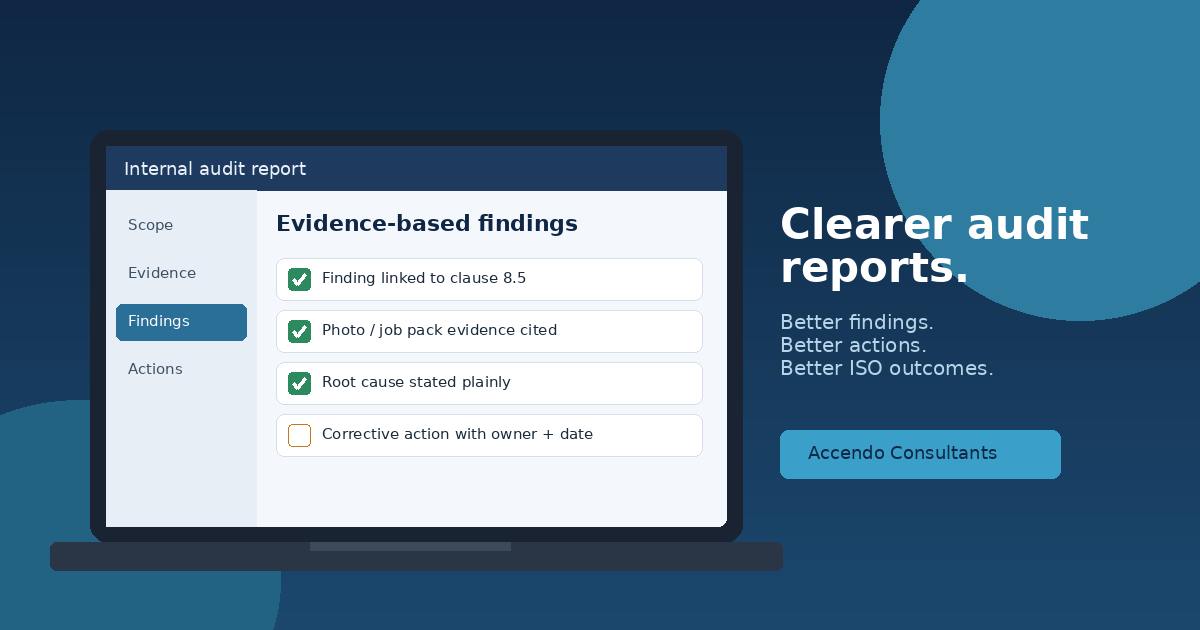
An internal audit that ticks every clause and finds nothing useful is a red flag. Assessors notice when audits are copy-paste, when findings never get closed, or when the same soft observation appears every year with no improvement.
Audit a sample of real work. Raise findings that matter. Close them with evidence. That prepares you for Stage 2 far better than a thick audit pack nobody trusts.
Management review as a rubber stamp
If management review is a meeting that rubber-stamps a consultant’s report and makes no decisions, expect challenge. Review should use real data: audits, complaints, incidents, performance, risks, and resources. Actions should have owners and dates.
One short, honest review with decisions beats a polished agenda that changed nothing.
Uncontrolled documented information
Obsolete forms on shared drives, multiple versions of the same procedure, and site packs that still carry last year’s template create findings fast. Control does not mean a document controller empire. It means current versions are obvious, obsolete ones are withdrawn, and people know where the live set lives.
Prevention: lean systems that are lived
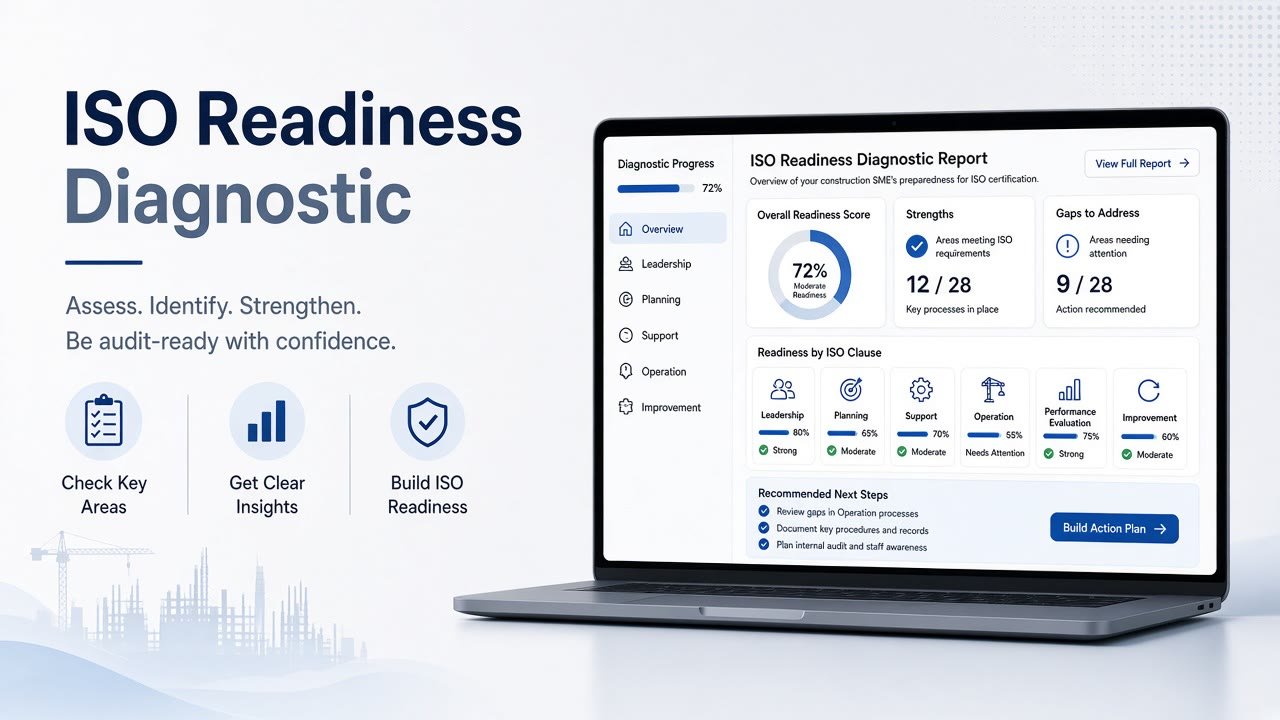
Most SME nonconformities are preventable if the system is minimum-viable and used:
- Write only what people will follow
- Sample real jobs in internal audit
- Keep competence and operational records as part of the job, not a separate paperwork project
- Fix gaps when you find them, before the certification body does
Accendo Consultants builds lean, UKAS-credible systems for how construction and contracting SMEs actually work. We prepare you for independent assessment. We do not bury you in forms that create findings of their own.
Closing the gaps before assessment
If you are heading toward Stage 1 or Stage 2 and want a blunt look at where NCs usually hide in businesses like yours, talk to us. We will help you close the real gaps and leave the decorative paperwork behind.
Accendo Consultants: lean ISO, UKAS-credible, built for how you work.