Scope is one of the first things a Stage 1 assessor reads, and one of the easiest places for SMEs to trip. A vague slogan on a certificate application (“quality construction services nationwide”) looks impressive in a brochure and weak under assessment. Getting scope right first time saves delay, cost, and awkward rework before Stage 2.
What scope actually has to do
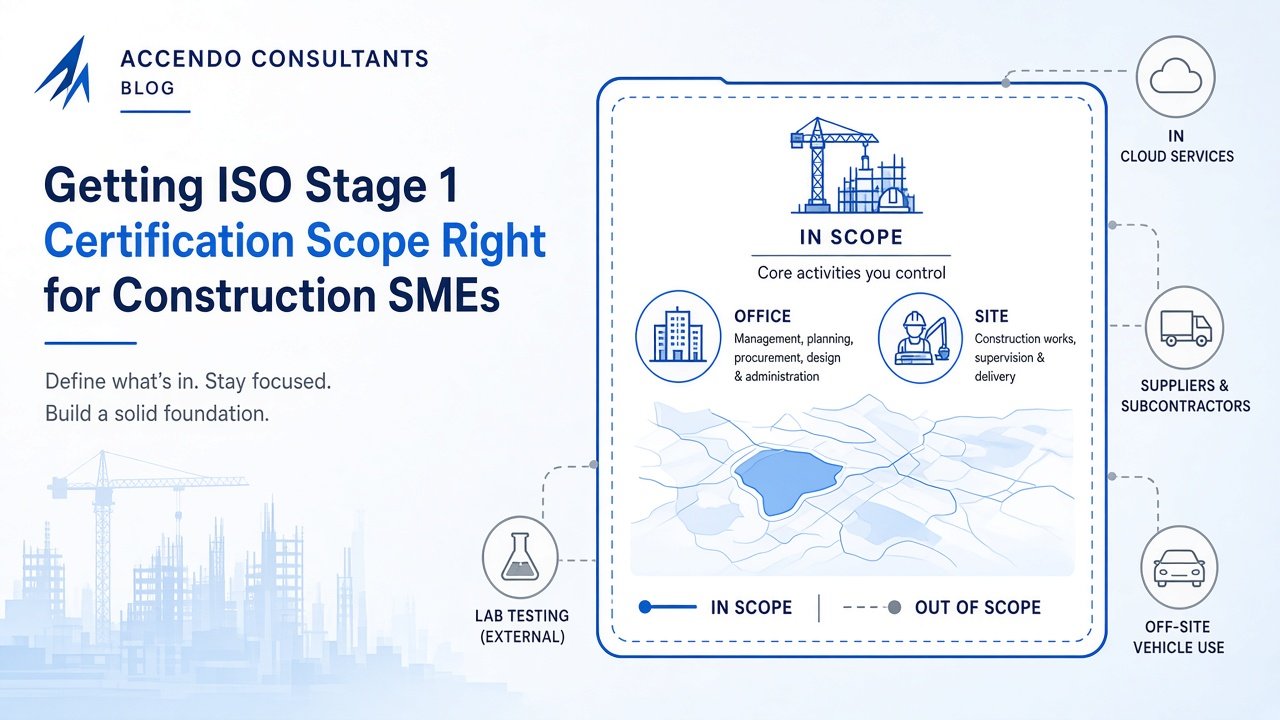
Scope defines what is covered by your management system and certificate: activities, products or services, and locations where relevant. It should be clear enough that an outsider can tell what is in and what is out.
It is not a marketing line. It is a boundary. If the boundary is fuzzy, assessment planning, sampling, and the finished certificate all suffer.
Clear in and clear out
Good scope statements for construction and contracting SMEs usually:
- Name the services you actually deliver under the system (for example design and build, M&E, civil works, maintenance, facilities)
- Reflect the standards you are claiming (9001, 14001, 45001, or integrated)
- Make exclusions explicit where the standard allows them, with a reason that holds up
- Avoid empty adjectives that add prestige and remove meaning
If a buyer or assessor cannot tell whether a given contract sits inside the certificate, the scope is not finished.
Multi-site and construction reality
Many SMEs run from a head office with temporary sites, satellite yards, or regional teams. Scope and the supporting description need to match that reality: which sites are permanent, how temporary sites are controlled, and whether remote or multi-site arrangements affect certification.
Wrong assumptions here cause Stage 1 findings and can push Stage 2 out. Assessors need a credible picture of where the system operates so they can sample it.
Why wrong scope delays Stage 2
If Stage 1 finds that the documented system does not cover the claimed scope, or that the scope claims work you cannot evidence, the certification body will not pretend otherwise. You fix the scope and the system alignment, then Stage 2 proceeds.
That delay is avoidable. It is usually cheaper to define a proportionate scope up front than to expand paperwork to defend a slogan.
Proportionate beats impressive
There is no prize for the widest possible scope on day one. A tight, honest scope that matches how you win and deliver work is stronger than a broad claim you cannot support. You can extend later when the system is lived and the evidence is there.
Accendo Consultants helps SMEs define proportionate, UKAS-credible scope as part of Stage 1 readiness. We translate how you actually operate into wording and system boundaries that assessors and tender buyers can both understand.
Getting scope right before Stage 1
If you are drafting or rewriting scope for ISO 9001, 14001, or 45001, treat it as a design decision, not a tagline. Map activities, locations, and exclusions. Check that your processes and records can support every word.
If you want a second pair of eyes before you lock it in with a certification body, talk to Accendo. We will help you keep it lean, clear, and defensible.
Accendo Consultants: lean ISO, UKAS-credible, built for how you work.
https://accendo.org.uk/