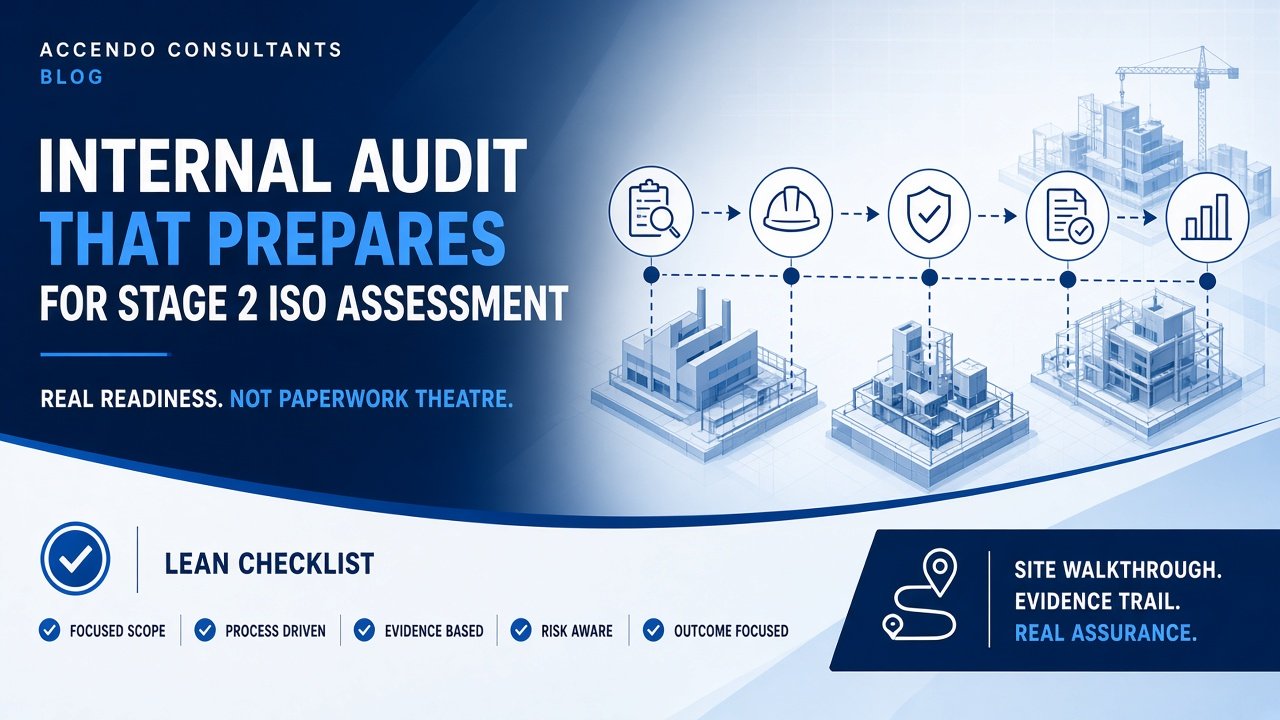
Internal audit is one of the most misused parts of an SME ISO system. Done badly, it becomes a second quality manual: clause-by-clause checklists, endless soft findings, and a report nobody reads. Done well, it is a short, sharp sample of real work that makes Stage 2 less of a surprise.
What internal audit is for
The point is not to prove you audited every sentence of the standard. The point is to check whether your system is working where it matters, find useful gaps, and fix them before an external assessor does.
For construction and contracting SMEs, that usually means following jobs, sites, and support processes that actually run: estimating to handover, health and safety controls on site, environmental aspects where they apply, supplier and subcontractor control, competence, and how you handle problems when they appear.
Sample real work, do not invent a parallel universe
A useful audit looks at:
- A live or recently completed job pack and whether controls ran as described
- Conversations with the people who do the work, not only the person who wrote the procedure
- Records that the work naturally produces (not a special audit folder filled the week before)
- Open actions from previous audits, incidents, or complaints, and whether they closed properly
If your audit only reviews documents in the office and never touches delivery, Stage 2 will feel like a different exam.
Useful findings beat perfect scores
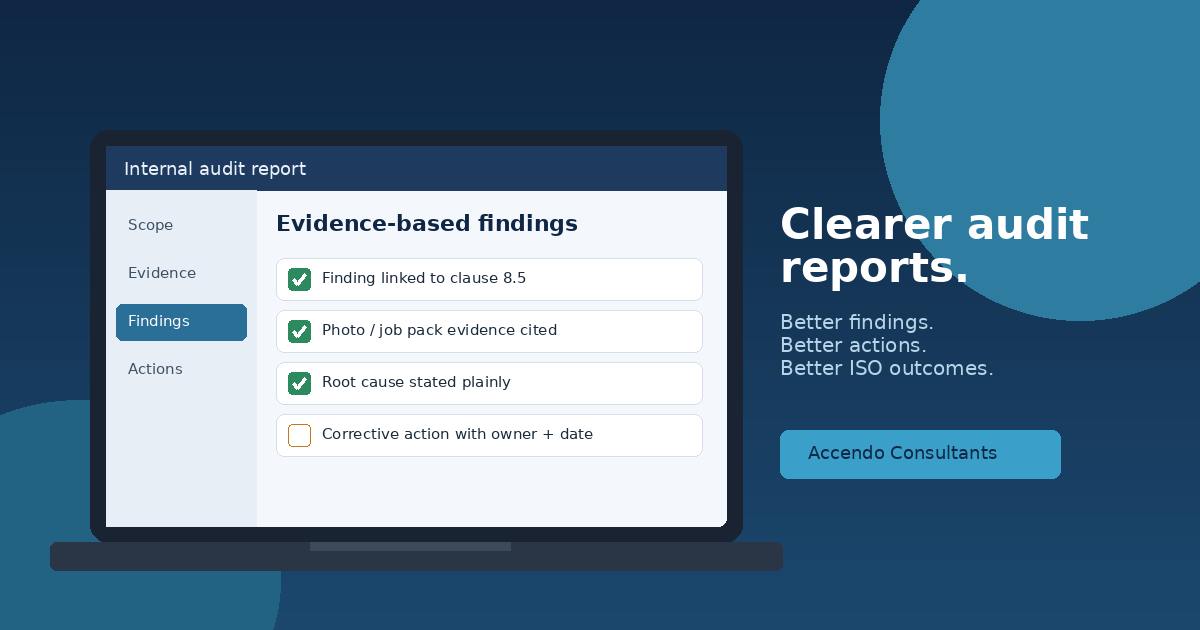
Assessors are not impressed by an internal audit that finds nothing year after year while the business clearly has friction. A small number of clear nonconformities or improvements, with owners, dates, and evidence of closure, shows the system is honest.
Theatre findings (“consider reviewing the procedure for clarity”) that never change anything waste everyone’s time. Raise what matters. Close what you raise.
Do not build a second QMS for the auditors
You do not need a separate audit empire, a hundred-page checklist, or a consultant voice that nobody in the business can repeat. Keep the programme proportionate:
- Plan coverage across the year so important processes get sampled
- Use checklists as prompts, not as a script that replaces judgement
- Record enough evidence that someone else can follow what you looked at
- Feed results into management review so leadership actually decides something
That is lean internal audit. It still meets the standard. It also prepares people for the questions a Stage 2 assessor will ask.
How this feeds Stage 2 readiness
Stage 2 samples implementation and effectiveness. If your internal audits have already walked the same trails, your team will be calmer, your evidence will be easier to find, and awkward gaps will already be closed or knowingly managed.
If your internal audits are decorative, Stage 2 becomes the first real test. That is an expensive way to learn.
Making audit useful without the weight
Accendo Consultants helps SMEs run lean internal audits that match delivery and still look credible to UKAS-accredited certification bodies. We are interested in readiness, not in creating another manual that only exists for audit day.
If your current audits feel like paperwork for paperwork’s sake, we can help you redesign them around sampling, useful findings, and Stage 2 confidence.
Accendo Consultants: lean ISO, UKAS-credible, built for how you work.
https://accendo.org.uk/