
You can add ISO 45001 to an existing ISO 9001 or ISO 14001 system without replacing the management system you already use. For most construction and contracting SMEs, the work is to extend the integrated system you have, not to write a second manual.
This is practical advice for UK contractors, including owner-led firms in Scotland, who already hold ISO 9001 or ISO 14001 and now need ISO 45001 for tenders, principal contractors, or a clearer way to run health and safety.
Why add ISO 45001 to a system you already have?
A quality or environmental certificate often gets you onto a list. A growing number of principal contractors and public buyers also want evidence of a structured health and safety system, and ISO 45001 is the standard they recognise. If your 9001 or 14001 system is already in use, you already have the spine of an integrated management system: context, leadership, planning, competence, operational control, internal audit, management review and improvement.
ISO 45001 uses the same high-level structure. That is why adding it should be an extension, not a restart. A separate health and safety manual that never meets the quality system is extra work, and assessors notice when the two do not match.
Do you have to rewrite the whole IMS?
No. Keep the procedures, registers and meeting rhythm that already work. Add the occupational health and safety content where it belongs, and leave the rest alone.
In practice that means one manual, one document register, one internal audit programme and one management review, with ISO 45001 in the same places you already cover 9001 and 14001. You will need some new or extended records, but you should not duplicate context statements, organograms or audit calendars just because a third standard has been added.
Talk to your UKAS-accredited certification body early about a scope extension. They will tell you how they will assess the new health and safety elements and how they sit in the system you already hold. Accendo can help you prepare, but we are not the certification body and we do not issue the certificate.
What actually needs to be added?
The distinctive ISO 45001 work is occupational health and safety, not another copy of the clauses you already meet. Typical additions for a contractor are:
- A clear OH&S scope that covers the sites and activities you actually do, not only the office.
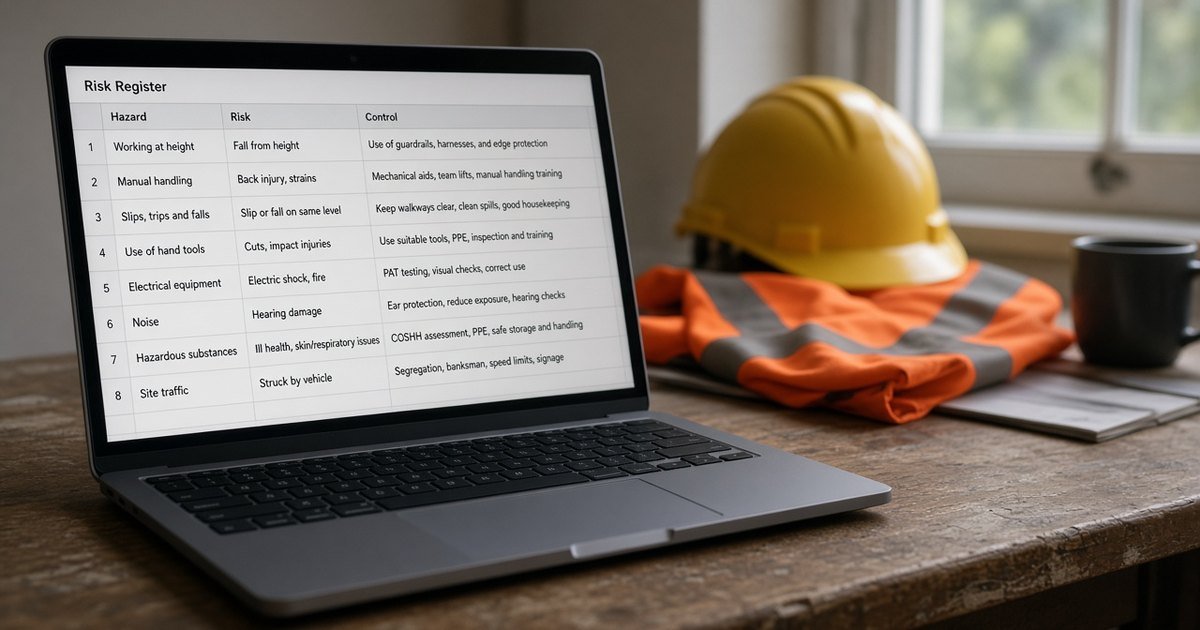
- Hazard identification and OH&S risk assessment that matches the work: plant, work at height, lifting, traffic, welfare, subcontractors and occupational health, not a generic office list.
- The legal requirements that apply to your work, kept in the legal register you already use, with owners who can show how they are met.
- Consultation and participation of workers. This is stronger in ISO 45001 than in ISO 9001 or ISO 14001. Supervisors and operatives should have a real route to raise hazards and influence controls, and you should be able to show that it happens.
- Competence and awareness for the tasks people actually do, building on the training records you already keep.
- Operational controls that appear in the job pack: RAMS, inductions, permits, inspections and the briefing at the start of the job.
- Incident investigation, first aid and emergency arrangements that are practised, not only written down.
- OH&S objectives and a simple way to monitor them, reviewed in the same management review as quality and environmental objectives.
You do not need a procedure for every clause. You need evidence that the controls above are used on live jobs.
How do you use the records you already keep?
Most contractors already hold a large part of the evidence. Inductions, toolbox talks, training and competence records, accident and incident reports, site inspections, COSHH assessments, RAMS and equipment checks are all relevant if they are current and match the work. The gap is usually consistency: the same control on every site, an owner, and a place you can find the record when an assessor asks.
Pull those records into the system you already run. Do not start a parallel filing structure that only exists for ISO. If a risk assessment or induction is already used on site, that is the record. Make sure it is complete, dated and available, then show it in internal audit and management review.
What will a UKAS assessor look for?
On a scope extension, the assessor is not only checking that a health and safety section has been added to the manual. They will want to see the system in use: a live risk assessment for current work, competence for the people on that job, consultation that is more than a signed attendance sheet, and incidents that were investigated and closed.
They will also check integration. If your quality objectives, audits and management review ignore health and safety, or if the OH&S risks describe a different business to the one in your 9001 scope, that will be a problem. The same company should show up in all three places.
Keep the sample small and honest. A short, used set of records beats a thick unused pack. Our article on building one lean IMS across ISO 9001, 14001 and 45001 sets out the same idea from the other direction, when you are putting all three in place together.
Where does Accendo fit?
We help construction and contracting SMEs across the UK, and as ISO 45001 consultants in Scotland (West Lothian, Edinburgh and Glasgow), add ISO 45001 to a working 9001 or 14001 system without burying the business in a second set of procedures. That is the same thinking behind our integrated management system for ISO 9001, 14001 and 45001.
Contact us today at andrew@accendo.org.uk.
Accendo Consultants: lean ISO, UKAS-credible, built for how you work.