ISO Quality Objectives: Examples for Construction SMEs

Laptop dashboard showing one-page ISO objectives for a construction company with progress bars and a target icon

ISO 9001 quality objectives for a construction SME should fit on one page. Three to six measurable targets, tied to the things that already cost you money (late handovers, rework, snags, waste, accidents), each with an owner and a date, reviewed at management review. That is the requirement. The forty-line corporate scorecard that nobody opens between audits is not.

As ISO consultants working with UK contractors, we still see objectives written as wallpaper: “to continually improve customer satisfaction”, “to be the contractor of choice”, “to protect the environment”. They sound fine on a policy board and give a UKAS assessor nothing to sample. Here is what the standards actually ask for, and some examples that work on real sites.

What does ISO 9001 actually require for quality objectives?

The requirement sits in clause 6.2 of ISO 9001:2015, quality objectives and planning to achieve them. In plain English, your objectives must:

  • Be consistent with your quality policy and relevant to your services and to keeping customers happy.
  • Be measurable, so you can tell whether you hit them.
  • Be monitored, communicated and updated as things change.
  • Come with a plan: what will be done, what resources are needed, who is responsible, when it will be finished and how the results will be evaluated.
  • Be kept as documented information. A short table is enough.

Notice what is not there. No minimum number, no set format, no requirement for a balanced scorecard or a KPI for every department. ISO 14001 (environmental objectives, clause 6.2) and ISO 45001 (OH&S objectives, clause 6.2) follow the same pattern, so an integrated management system can hold all of them in the same one-page table.

What are good examples of ISO objectives for a contractor?

The best objectives use numbers you already collect for running the business. A few examples we see work well for construction and contracting SMEs:

  • Quality (ISO 9001): hand over 90% of projects on or before the agreed completion date; reduce snags at handover to an average of no more than a set number per job; keep rework costs below an agreed share of turnover; close customer complaints within 10 working days.
  • Environmental (ISO 14001): increase the share of skip waste segregated or recycled; cut fuel used per vehicle by a set percentage through route planning and idling rules; zero environmental incidents reported by clients or regulators.
  • Health and safety (ISO 45001): 100% of operatives inducted before starting on site; deliver a toolbox talk on every live site every fortnight; close site inspection actions within an agreed number of days; no RIDDOR reportable incidents.

Set the actual targets from your own data. If you do not yet know your snag rate or recycling rate, the first objective can simply be to start measuring it consistently, with a target set at the next management review. That is honest, and assessors accept it.

How many objectives do you need?

Fewer than you think. For a typical SME, three to six objectives per standard is plenty, and often fewer for a small team. If an objective has no owner, no number and no action plan, it is not helping you and it gives an assessor an easy finding. Better to have four you genuinely track than fifteen you copy forward every year.

What does a UKAS assessor check on objectives?

At Stage 1, Stage 2 and surveillance audits, a UKAS accredited certification body will usually check that:

  • Objectives exist for relevant functions and levels, and link back to the policy.
  • They are measurable, and you can show current results against them.
  • Someone owns each one, and there is a plan with timescales.
  • Results were reviewed at management review, with decisions recorded (keep, raise the target, change the approach).
  • People in the business know the objectives that affect their work. A site supervisor who can tell the assessor about the snag target is worth more than a laminated poster.

The common nonconformities are predictable: objectives that are not measurable, no evidence of monitoring during the year, or objectives that have not changed in three years with no explanation.

How do you keep objectives on one page?

A lean set-up that works for most contractors:

  • One table with columns for objective, standard, target, measure, owner, actions, due date and latest result.
  • Results pulled from data you already hold: programme dates, snag lists, waste transfer notes, fuel cards, inspection reports.
  • A quarterly glance at a simple dashboard or spreadsheet, so the management review is a short decision meeting rather than a hunt for figures.
  • Last year’s objectives carried forward with the same measurement method, so you can compare like with like, then adjusted where the business has moved on.

That covers clause 6.2 across ISO 9001, 14001 and 45001, survives an audit sample and takes minutes a month to keep up.

How Accendo can help

If your objectives read like a mission statement, or you are not sure what your UKAS assessor will expect to see, we can help you turn them into a short set of targets your team can actually use. We are ISO consultants in the UK working with construction and contracting SMEs, including clients across Scotland in Edinburgh, Glasgow and West Lothian, on ISO 9001, ISO 14001 and ISO 45001. Our integrated management system for ISO 9001, 14001 and 45001 keeps objectives and every other control proportionate to the work you actually do. Get in touch for a friendly, no pressure chat.

Accendo Consultants: lean ISO, UKAS-credible, built for how you work.
https://accendo.org.uk/

Pre-Assessment Site Audit: MCL Ready for ISO Assessment

Tablet showing a completed site audit checklist beside a green shield with a tick and an orange hard hat

I have just been on site at MCL carrying out a pre-assessment site audit. The result: MCL is compliant and ready for its ISO assessment next week. Here is why that visit matters, and why I recommend one to every client before an external assessor turns up.

What is a pre-assessment site audit?

A pre-assessment site audit is a final, practical check of how the management system works in real life, done shortly before the certification body visits. It is not a rerun of the internal audit and it is not a paperwork exercise. The question is simple: if an assessor walked in tomorrow, would what they see match what the system says?

MCL works in the utilities and civil engineering sector, so the real work happens out on site and in the yard, not at a desk. That is exactly why the audit had to happen there.

Why does it matter before an ISO assessment?

As an ISO consultant working with UK contractors, I see the same pattern again and again. A company has good procedures and tidy records, but nobody has checked that the two line up with daily practice. Assessors find that gap in minutes.

A site audit a week or so before the assessment gives you three things:

  • Confidence. You know where you stand, rather than hoping.
  • Time to fix. Anything small can be tidied up before the assessor arrives, not explained away afterwards.
  • Better answers. Staff who have just been asked the questions are far more relaxed when the assessor asks them again.

What did I check on site?

I kept it practical and in line with the integrated management system covering quality, environment, and health and safety. In general terms, a visit like this looks at:

  • Do people know the system? Do staff understand the policy, their own responsibilities and where to find the information they need?
  • Are the records live? Checks, inspections and forms completed, current and consistent with what is happening on the ground.
  • Is the site in good order? Housekeeping, equipment, controls and signage that match the risks and the procedures.
  • Do the processes work as written? What the procedures say against what actually gets done.
  • Is the paperwork joined up? Internal audit, management review and corrective actions all telling the same story.

Across everything I looked at, the system and the site matched. MCL is in a good position and ready for assessment.

Does that mean certification is guaranteed?

No, and anyone who promises that is selling you something. The certification body makes the decision, and it should. What a pre-assessment site audit does is make sure you walk into that assessment prepared, with a management system that reflects how you really work. Ready for assessment is the goal, and for MCL we are there.

Is a pre-assessment audit worth it for a small contractor?

Yes. For a small or mid-sized business, the assessment is a big day. A short, focused site visit costs far less than the stress of a surprise finding, and it keeps the system lean. If a record or procedure adds nothing, it should go, not grow. That is how ISO should be done: quicker and lighter than most people expect, and still credible with UKAS-accredited certification bodies.

Looking for an ISO consultant in Scotland or across the UK?

We are an ISO consultant based in West Lothian, working with contractors and SMEs across Scotland, including Edinburgh, Glasgow and the central belt, and across the UK. If you have an ISO 9001, ISO 14001 or ISO 45001 assessment coming up and want someone to check it works on site before the assessor does, take a look at our integrated management system for ISO 9001, 14001 and 45001, or just ask for a chat. Contact us today at andrew@accendo.org.uk.

Accendo Consultants: lean ISO, UKAS-credible, built for how you work.
Holding Your UKAS Certification Body to Account: What ISO/IEC 17021-1 Says About Audit Findings

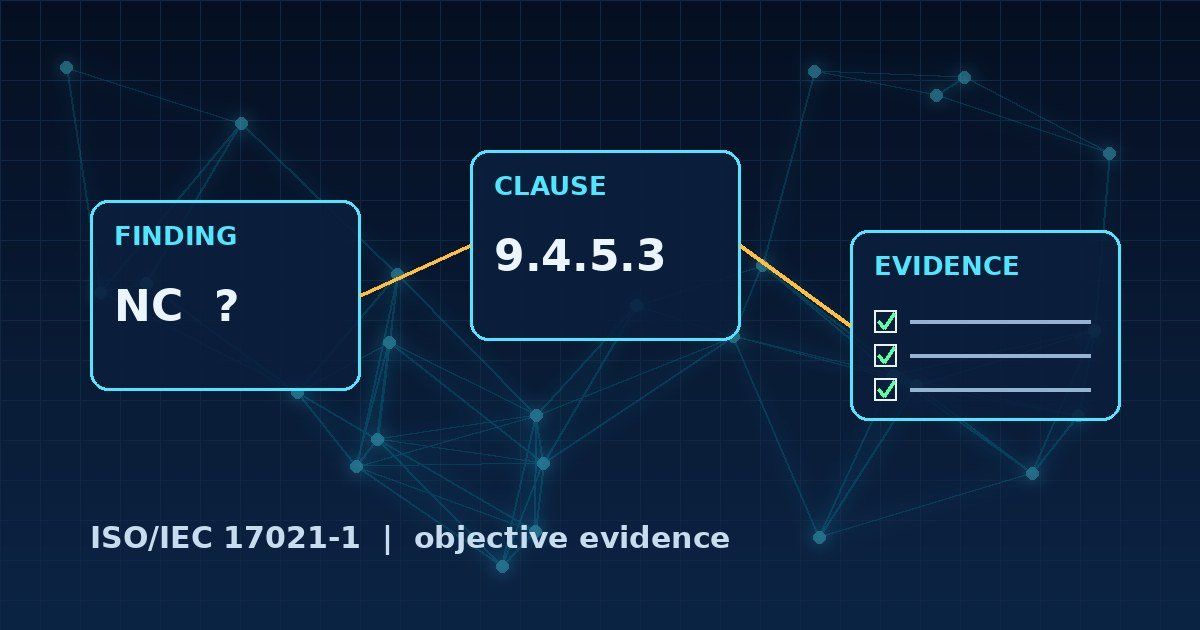
Abstract digital graphic of an audit finding linked to a clause reference and an evidence checklist on a dark blue grid

You have done the work, the assessor has been on site, and at the closing meeting a nonconformity lands on the table that just does not feel right. Maybe it is not clear which requirement it relates to. Maybe it is graded as a major when it looks like a paperwork slip. For many construction SMEs the instinct is to accept it quietly and move on. You do not have to.

Certification bodies (CBs) accredited by UKAS are themselves audited against a standard: ISO/IEC 17021-1:2015, the requirements for bodies providing audit and certification of management systems. That standard sets out how findings must be written, how disagreements must be handled and what the CB must do when a client appeals or complains. Knowing those rules is the best way to make sure your UKAS certification is fair, accurate and worth having.

Every nonconformity must cite a requirement and objective evidence

Clause 9.4.5.3 of ISO/IEC 17021-1 is very clear. A finding of nonconformity shall be recorded against a specific requirement, and shall contain a clear statement of the nonconformity, identifying in detail the objective evidence on which it is based. It also says nonconformities shall be discussed with you to make sure the evidence is accurate and the finding is understood.

So a good finding answers three questions:

  • Which requirement? For example, a named clause of ISO 9001, ISO 14001 or ISO 45001, or one of your own documented procedures if that is the audit criterion.
  • What is the gap? A plain statement of what does not meet that requirement.
  • What evidence? The record, observation or interview that shows it, such as a specific job file, permit or training record.

If any of these is missing, you are entitled to ask for it. Clause 9.4.5.3 also says the auditor shall refrain from suggesting the cause of a nonconformity or its solution, so the finding should describe the problem, not prescribe your fix.

Major or minor: the definitions that matter

Grading drives your timescales and, in some cases, whether certification can be recommended, so it is worth knowing the exact wording.

  • Major nonconformity (clause 3.12): a nonconformity that affects the capability of the management system to achieve the intended results. The note to this definition gives examples: where there is significant doubt that effective process control is in place, or that products or services will meet specified requirements, or where a number of minor nonconformities against the same requirement or issue show a systemic failure.
  • Minor nonconformity (clause 3.13): a nonconformity that does not affect the capability of the management system to achieve the intended results.

The test is about capability to achieve intended results. A single missing signature on a toolbox talk record is rarely the same thing as having no control over subcontractor competence. If a grading seems out of proportion, ask the auditor to explain how the finding meets the 3.12 definition.

Your right to query a finding with the lead auditor

The standard expects conversation, not just a report. Under clause 9.4.5.4, the audit team leader shall attempt to resolve any diverging opinions between the audit team and the client about audit evidence or findings, and unresolved points shall be recorded.

The closing meeting reinforces this. Clause 9.4.7.3 says you shall be given the opportunity for questions, that diverging opinions shall be discussed and resolved where possible, and that any not resolved shall be recorded and referred to the certification body. Clause 9.4.7.2 also requires the closing meeting to include information about the CB’s complaint and appeal handling processes.

In practice:

  • Raise your concern on the day, calmly, and show any evidence the auditor may not have seen.
  • If it is not resolved, ask for your disagreement to be recorded. That record is your starting point for anything that follows.
  • Keep notes of what was said and what evidence was offered.

The CB’s appeals and complaints process

If the conversation on site does not settle it, every accredited CB must have formal routes for you to use.

Appeals (clause 9.7). The CB shall have a documented process to receive, evaluate and make decisions on appeals. The people handling an appeal must be different from those who carried out the audit and made the certification decision (9.7.2), and the decision communicated to you must be made, or reviewed and approved, by people not previously involved (9.7.7). The CB must acknowledge your appeal, give you progress reports and the result (9.7.6), and making an appeal shall not result in any discriminatory action against you (9.7.3).

Complaints (clause 9.8). Complaints are handled separately, again with the requirement that submitting one shall not result in discriminatory action against the complainant (9.8.2), and the CB should give formal notice when the process ends (9.8.10).

Most CBs publish their complaints and appeals procedure on their website or in their certification terms. Read it before you submit, follow its format and deadlines, and put everything in writing.

Escalating to UKAS

UKAS is the UK’s national accreditation body, and it oversees whether accredited CBs keep meeting the standards they are accredited to. Its guidance is clear that you must complain to the accredited body first and give it the opportunity to investigate and respond. If you have done that and believe the requirements of the accreditation standard may not have been met, you can escalate to UKAS.

UKAS asks for complaints in writing, including a summary of who and what the complaint is about, a brief timeline, a copy of your complaint to the CB and any relevant correspondence. It also explains what it cannot do: it is not a regulator or an arbitration service, and financial disputes, contract matters and refund claims fall outside its remit. Keep your escalation focused on whether the CB followed ISO/IEC 17021-1, not on fees.

Where AI helps: an objective sense-check

This is where things have genuinely changed. You no longer need a consultant in the room to ask, “does this finding actually fit the clause?” A modern AI assistant can help you put a finding side by side with the requirement it cites and the evidence described, and highlight where they do not line up.

A simple approach:

  1. Write down the finding exactly as recorded, the clause it cites and the evidence it refers to.
  2. Ask the AI to compare the wording of the finding against the requirement you have in front of you, and to point out any gap between what the clause asks for and what the finding says is missing.
  3. Ask it to test the grading against the major and minor definitions above.
  4. Use the output to prepare clear, specific questions for the lead auditor.

A few sensible guardrails:

  • Human judgement comes first. AI can misread a clause or miss context the auditor saw on site. Treat its answer as a prompt for thinking, not a verdict.
  • Work from the real text. ISO standards are copyright, so use your own licensed copy and check any clause wording the AI gives you against it.
  • Protect confidential information. Remove client names, personal data and commercially sensitive detail before using any AI tool, and follow your own data policy.
  • Stay respectful. Assessors do a demanding job and most findings are fair. The aim is accuracy, not winning an argument. A polite, evidence based query is far more likely to get a finding corrected than a confrontation.

A quick checklist for your next assessment

  • Does each nonconformity name a specific requirement?
  • Is the objective evidence identified in detail?
  • Does the grading match the clause 3.12 or 3.13 definition?
  • Were your diverging opinions discussed and, if unresolved, recorded?
  • Do you know where the CB’s complaints and appeals procedure is published?
  • Have you kept written notes and copies of everything?

How Accendo can help

As an ISO consultant in the UK working closely with construction SMEs, we help clients prepare for UKAS certification audits, review findings after the event and, where needed, put together a clear, well evidenced query or appeal. If you are looking for an ISO 9001 consultant in Scotland or anywhere in the UK and want a second pair of eyes on a finding, get in touch for a friendly, no pressure chat.

Had an audit finding you are not sure about? UKAS CB NC (ISO/IEC 17021-1), OFI, Observation Process Check. We will look at the finding, the clause it cites and the evidence behind it, and give you a straight, practical view on whether it stands up.

Accendo Consultants: lean ISO, UKAS-credible, built for how you work.

UKAS ISO Certification: Read the Contract Before You Sign

Digital illustration of an ISO contract with a highlighted renewal clause under a magnifying glass, a renewal timeline, an accreditation shield and rising cost bars

Before you sign an ISO deal sold “from a low monthly fee”, check two things: who accredits the certification body, and what the contract says about renewal and exit. Some large bundled providers sell ISO on multi-year contracts, and the certificate is not always UKAS ISO certification. For a construction or engineering SME, that can mean years of payments for a certificate a main contractor may not accept.

This is not a rant about competitors. Bundled packages suit some businesses. The point is simple: know what you are buying, and check it against what your clients ask for.

What is a bundled ISO package?

A bundled package wraps consultancy, software, templates and the certification audit into one monthly payment. That can look tidy. You get one supplier, one direct debit and a certificate at the end.

The catch is the term. One large provider’s own pricing example is based on a 7-year contract. Over that length of time your business can change a lot. You might win a framework, take on a new client with stricter supplier rules, or simply decide you want a different consultant. The contract does not change with you.

Is a non-UKAS certificate worthless?

No. A certificate from a body accredited by someone other than UKAS is not fake, and it is not automatically invalid. Accreditation is not a legal requirement for certification.

The real question is whether your buyers accept it. In the UK, UKAS is the national accreditation body appointed by government. Many main contractors, tenders and public buyers ask for certificates issued by a UKAS-accredited certification body, or by a body accredited through the international recognition arrangements that UKAS belongs to (these were run by IAF and are now run by Global ACI). Some buyers are relaxed about it. Others are not.

Some providers are open about this. One large provider’s certification arm says plainly on its own website that it is “not accredited by UKAS” and is accredited by a different, independent accreditation body. That accreditation body in turn says it is not a member of IAF, ILAC or Global ACI, and that whether a certificate is accepted for procurement “depends on the requirements set by the organisation, scheme or contracting authority involved”. In other words: it is up to your buyer.

Picture a groundworks contractor in West Lothian who signs a long contract, gets the certificate, then goes for a place on a main contractor’s supply chain. The pre-qualification form asks for UKAS-accredited ISO 9001. The certificate is real, but it does not tick the box. The business now needs a second certificate and is still paying for the first.

We cover the buyer side in more depth in UKAS vs non-UKAS certificates: what tender buyers actually check.

What do the renewal and exit terms look like?

Every contract is different, so read yours. But here is what one large provider’s published terms and conditions say, in plain English:

  • Automatic renewal. Subscription contracts renew automatically for a further period equal to the initial term, unless either side gives written notice at least six months before the end of the term.
  • Ending early by agreement. If both sides agree to end the contract early, you get a final invoice for 75% of the charges not yet invoiced for the rest of the contract period, plus VAT.
  • Price rises. From the first anniversary, charges can rise once a year by the greater of 3% or the Retail Prices Index.
  • Paying from day one. Charges for the ISO service start from the commencement date, whatever date the certificate is issued.
  • Suspension. If audit issues are not put right in time, the certificate can be suspended, but you still pay the charges for the rest of the term.

None of that is hidden. It is in the document. The problem is that a busy contracts manager or MD often signs on the strength of the sales call and the monthly figure, not the small print.

How do I check a certificate and a certification body?

It takes a few minutes and costs nothing.

  • Check the certification body. Search the UKAS directory of accredited organisations. If the body is UKAS-accredited for the standard you want (ISO 9001, ISO 14001 or ISO 45001), it will be listed.
  • Check the certificate. UKAS CertCheck is a free tool for verifying UKAS-accredited management system certificates. IAF CertSearch covers certificates under the wider international arrangements.
  • Ask the question directly. “Which accreditation body accredits your certification body, and for which standards?” A good provider will answer straight away, in writing.

What should I check before I sign?

Treat it like any other long-term commitment, such as a van lease or a plant hire agreement.

  1. Ask your main clients what they accept. Email your top three customers or check their supplier portals and pre-qualification questions. If they want UKAS, you have your answer.
  2. Read the renewal, notice and termination clauses. How long is the initial term? Does it roll over? How much notice do you need to give, and by when? What does it cost to leave early?
  3. Work out the total cost over the full term. Multiply the monthly fee by the number of months (a 7-year term is 84 payments), add any set-up fee, then allow for annual price rises. Compare that figure, not the monthly one.
  4. Check what you keep if you leave. Who owns the documents, procedures and records? Can you take your system to another consultant or certification body?
  5. Get it in writing. Anything the salesperson promised that matters to you should be in the contract. The terms we read say marketing materials do not form part of the contract.

How does Accendo do it differently?

As an ISO consultant UK businesses use mainly in construction, engineering and manufacturing, we keep consultancy and certification separate.

  • We are not the certification body. We prepare you for audit by an independent UKAS-accredited certification body. Most of our clients are certified by NQA, with some using BSI or Intertek.
  • Scoped fees, not a long subscription. Implementation is quoted for your organisation. Full Lean IMS for ISO 9001, 14001 and 45001 starts from £5,750 plus VAT. Retainers and other work are by enquiry.
  • You deal with Andrew. Andrew Landels runs Accendo from Armadale, West Lothian, and works with clients directly.
  • Lean, not heavy. A lean integrated management system that fits how your business already works, and that your own team can maintain.

If you are looking for an ISO 9001 consultant in Scotland or elsewhere in the UK, and you want a UKAS route you can explain to any buyer, we are happy to talk it through. If you have already been offered a bundled contract, send it over and we will tell you what to look for in it before you sign.

Contact us today at andrew@accendo.org.uk.

Accendo Consultants: lean ISO, UKAS-credible, built for how you work.
ISO 9001 Resources: Why the Run-Up to Assessment Goes Wrong

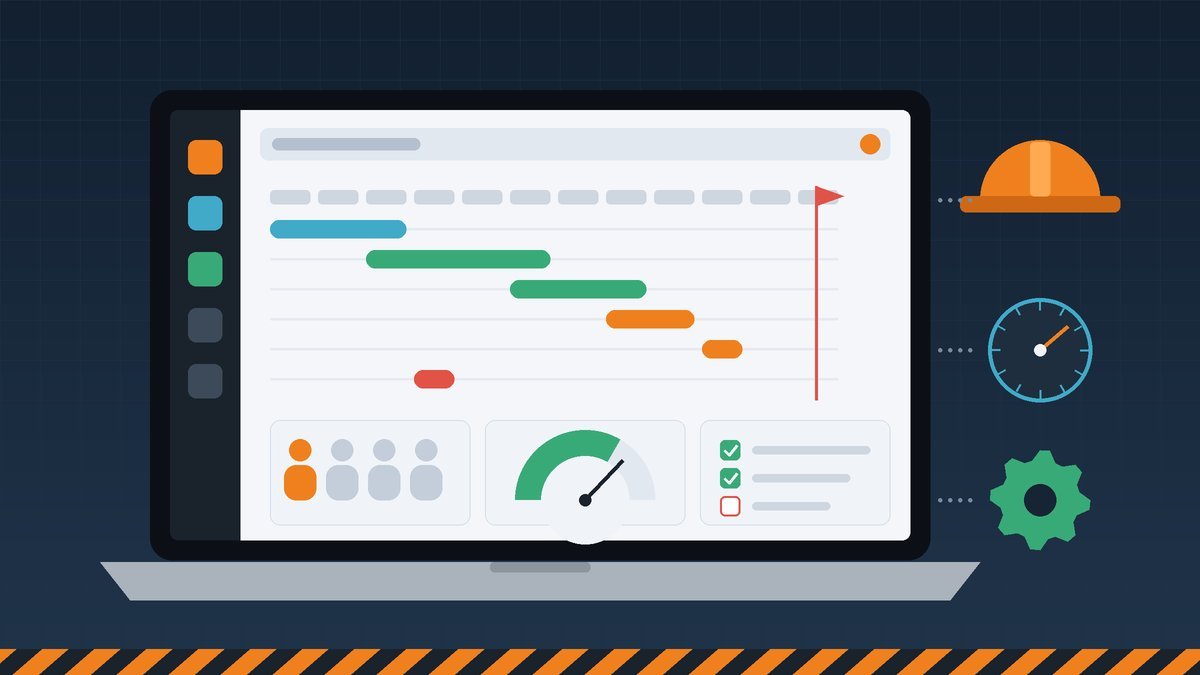
Laptop dashboard showing an ISO audit year planned back from an assessment date, with team capacity, a progress gauge, a checklist, a hard hat and a calibration dial

ISO 9001 resources are not a paperwork clause. ISO 9001, ISO 14001 and ISO 45001 all ask the business to decide what it needs to run its management system and then actually provide it. When the time and people are not set aside, the problem rarely shows up in month one. It shows up in the run-up to a Stage 1, Stage 2 or surveillance assessment, when the internal audit has not happened, the management review is a rushed meeting and one person is trying to hold the whole system together. For construction and engineering SMEs in Scotland and across the UK, that crunch is avoidable.

Here is what the standards require, why a lack of resource causes trouble before assessment, and how to stop it.

What does ISO clause 7.1 Resources require?

All three standards share the same high-level structure, so clause 7.1 Resources sits in the same place in each. In plain terms, the organisation has to work out what resources it needs to set up, run, maintain and improve its management system, and then provide them. ISO 14001 and ISO 45001 keep it to that single requirement. ISO 9001 goes further and breaks it into parts:

  • People. Enough of the right people to run your processes and the system.
  • Infrastructure. Buildings, plant, vehicles, equipment, software and IT, kept fit for use.
  • Environment for the operation of processes. The working conditions needed, physical (heat, light, noise) as well as social and psychological (stress, workload).
  • Monitoring and measuring resources. Where you use equipment to check work meets requirements, it has to give valid results. Where traceability matters, that means calibration or verification at set intervals, clear identification and protection from damage. ISO 14001 and ISO 45001 cover calibrated or verified equipment under clause 9.1.
  • Organisational knowledge. The know-how needed to run your processes, kept and shared so it does not leave when a person does.

How do competence, leadership and management review fit in?

Clause 7.1 does not stand alone. Three other clauses tie resources to how the business is run.

  • 5.1 Leadership and commitment. Top management must make sure the resources the system needs are available. That is a director-level duty.
  • 7.2 Competence. You decide what competence people need, make sure they have it through education, training or experience, act to close gaps, check whether those actions worked, and keep evidence. We covered the lean way to do this in ISO competence records for construction SMEs.
  • 9.3 Management review. Adequacy of resources is one of the inputs top management must consider, and any need for resources is one of the outputs. If your review never asks “do we have enough people and time to run this?”, it is missing part of what the standards ask for.

Why does a lack of resource cause problems before assessment?

Most small firms do not set out to under-resource their system. Work comes first. A big contract lands, the quality lead is pulled onto site, and the ISO tasks slide until the certification body’s date appears in the diary. Then the same problems turn up.

  • Internal audits rushed or missed. The audit programme said one thing, but the audits were never done. They get crammed into the final fortnight, often by the person who wrote the procedures, so they are neither thorough nor impartial.
  • Management review squeezed into a single meeting. Directors sign minutes they had little time to read, and the inputs, including resources, are thin or missing.
  • Actions left open. Findings from the last audit, last year’s assessment or a site incident sit in the register with no owner and no close-out. An assessor will look at that register.
  • Calibration and training records out of date. A torque wrench, gas detector or laser level is past its calibration date. A CSCS card or first aid certificate has expired. Easy to fix with notice, awkward on the day.
  • One person carrying the whole system. When everything lives in one person’s head or inbox, a holiday, sick day or resignation leaves the business unable to answer basic questions.

Before Stage 2, your certification body will want to see that internal audits and management review are planned and being carried out. At surveillance, they will check the system is still working, not just that it existed last year. A UKAS-accredited assessment is built to find a system that only comes to life the week before the visit.

Is this the same as saying you should not get certified?

No. In September we wrote that if you will not resource ISO 9001 at all, you should rethink the certificate. This post is about the firms who do want it, have committed to it, and still end up in a scramble because time and people were never actually set aside. For them the answer is to plan the resource in, the same way you plan labour and plant for a job.

How do you resource ISO without overloading the business?

Lean ISO does not need a big team. It needs a few clear decisions, made early.

  1. Name an owner. One person is responsible for keeping the system moving, with a named deputy who knows where things are.
  2. Block time in the diary. A regular slot, even a couple of hours a month, for evidence, actions and records.
  3. Plan the audit year back from the assessment date. Start with the certification body’s date. Put management review a few weeks before it, internal audits before that, and leave room to close findings. Add calibration and training renewal dates to the same plan so nothing expires in the gap.
  4. Make records part of the work. Digital forms for inspections, toolbox talks and equipment checks, filled in on site, mean the evidence exists without a separate admin job.
  5. Review resource honestly at management review. If the owner is stretched, say so and decide what changes.
  6. Use an external consultant to fill gaps. An ISO consultant can run internal audits independently, prepare management review, chase open actions and keep the system ticking when your team is flat out on site.

If you run ISO 9001, ISO 14001 and ISO 45001 together, an integrated management system helps a lot here. One audit programme, one management review and one action register mean one set of deadlines to plan for, not three. See our 90-minute management review approach for how lean this can be.

How Accendo can help

Accendo is an ISO consultant UK firms use when they want certification to fit around real work. As an ISO 9001 consultant in Scotland, based in West Lothian, we support construction and engineering SMEs with internal audits, management review, assessment preparation and ongoing support through our Lean IMS for ISO 9001, 14001 and 45001. If your next assessment is coming up and the resource is not there, talk to us early, not the week before.

Contact us today at andrew@accendo.org.uk, or through our contact page.

Accendo Consultants: lean ISO, UKAS-credible, built for how you work.